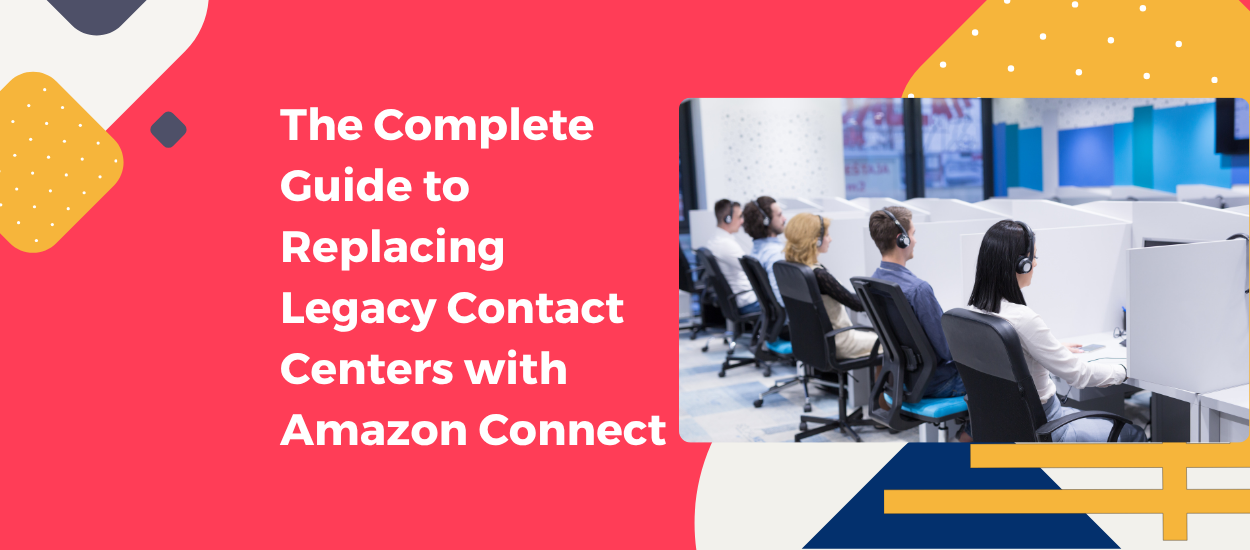
TL;DR - Replacing legacy contact centers with Amazon Connect helps businesses reduce operational costs, improve customer experiences, and adopt AI without the complexity of on-premises infrastructure. This guide explains why organizations are moving away from Cisco, Avaya, and Mitel, and how to migrate successfully with minimal disruption.
Is Your Contact Center Driving Growth or Holding It Back?
Your contact center may still be working, but is it helping your business move forward?
If simple updates require IT support, your agents switch between multiple systems, and customers spend too much time waiting for answers, your contact center could be slowing your business down more than you realize.
The challenge isn't that legacy platforms like Cisco, Avaya, and Mitel no longer work. It's that they were built for a different era.
Today, customers expect fast, personalized support across every channel. Businesses need the flexibility to scale, embrace AI, and improve customer experiences without increasing costs or adding complexity.
That's why more organizations are replacing legacy contact centers with Amazon Connect. Instead of maintaining aging infrastructure, they're investing in a cloud-native platform that helps them innovate faster, streamline operations, and prepare for the future.
In this guide, we'll explore why businesses are making the switch, how to plan a successful migration, the common pitfalls to avoid, and how Tollanis can help you modernize with confidence.
Why Legacy Contact Centers Are Reaching a Tipping Point
Technology doesn't become obsolete overnight. Instead, it happens gradually.
One software upgrade takes longer than expected. A new integration becomes more complicated than it should be. Maintenance contracts get more expensive every year. Your agents begin using workarounds because the platform can't support modern workflows. Eventually, what was once a competitive advantage becomes a daily operational challenge.
That's exactly where many organizations find themselves today.
Legacy contact center platforms were designed to solve yesterday's problems. They delivered dependable voice communication, basic routing, and on-premises reliability. But customer service has changed dramatically over the last decade.
Today's contact center isn't just about answering phone calls. It's about delivering connected customer experiences across voice, chat, SMS, email, social messaging, and self-service channels while giving agents the tools they need to resolve issues quickly. Unfortunately, many legacy systems struggle to keep pace.
Common challenges include:
-
Rising hardware maintenance costs
-
Expensive licensing and support agreements
-
Limited scalability during seasonal demand
-
Complex upgrades that require downtime
-
Siloed customer information across multiple systems
-
Difficult integrations with modern CRM and business applications
-
Limited AI and automation capabilities
-
Reduced flexibility for remote and hybrid workforces
Individually, these issues may seem manageable. Together, they create operational friction that affects nearly every aspect of customer service.
Instead of investing in innovation, IT teams spend valuable time keeping aging infrastructure running. Instead of improving customer experiences, supervisors focus on solving technical limitations. Instead of empowering agents, businesses ask them to work around outdated systems.
It's a cycle that becomes more expensive every year.
The financial impact is significant. Gartner estimates that organizations spend 60–80% of their IT budgets maintaining existing systems rather than driving innovation, making legacy infrastructure a major barrier to digital transformation.

The Customer Has Changed Faster Than Legacy Technology
Customer expectations have evolved faster than many legacy contact centers. Research from PwC found that 32% of customers will stop doing business with a brand they love after just one bad customer experience, emphasizing why modern customer service has become a competitive differentiator.
Today, customers expect fast, personalized support across every channel without repeating information or waiting for answers. They compare every service experience, not just with your competitors, but with the best digital experiences they have every day.
Legacy contact centers weren't built for these expectations. Modern cloud contact centers are. As AI, automation, and omnichannel support become the standard, the gap between legacy and cloud platforms continues to grow.
Why Businesses Are Moving Away from Cisco, Avaya, and Mitel
Cisco, Avaya, and Mitel have been trusted enterprise contact center platforms for decades. But as customer expectations and business needs evolve, many organizations are finding that legacy systems can no longer deliver the flexibility, scalability, and innovation required to stay competitive.
The question is no longer whether these platforms work. It's whether they're built for the future.
1. Cisco
Cisco contact center solutions remain powerful, especially in large enterprise environments. However, many organizations report increasing challenges such as:
-
Complex architecture that requires specialized expertise
-
Higher infrastructure and maintenance costs
-
Lengthy deployment timelines
-
Multiple licensing models
-
Greater effort to integrate modern AI and cloud services
For organizations focused on agility, these factors can slow innovation and increase operational expenses.
2. Avaya
Avaya has long been a trusted name in enterprise contact centers. Yet many businesses are now reassessing their long-term strategy because they need greater cloud flexibility and faster innovation.
Common migration drivers include:
-
Aging on-premises infrastructure
-
Increasing maintenance costs
-
Complex upgrade cycles
-
Limited flexibility for rapid business changes
-
Challenges adopting advanced AI capabilities
Rather than continuing to invest in aging infrastructure, organizations are choosing cloud-native platforms that evolve continuously.
3. Mitel
Mitel continues to serve organizations across multiple industries. However, companies planning for long-term digital transformation often encounter challenges such as:
-
Limited scalability compared to cloud-native platforms
-
Greater dependence on existing infrastructure
-
More complex integration with modern applications
-
Slower access to emerging customer service innovations
As customer expectations continue to evolve, many businesses are looking for solutions designed around flexibility rather than hardware.
It's Not About Replacing Technology. It's About Modernizing Your Business.
One of the biggest misconceptions about migration is that organizations replace legacy contact centers because they're broken.
That's rarely the case. Most organizations migrate because they want to accomplish goals their current platform makes difficult.
For example:
- They want to launch AI-powered self-service without rebuilding their entire infrastructure.
- They want to scale during seasonal demand without purchasing additional hardware.
- They want to connect customer data across CRM, ERP, workforce management, and analytics platforms.
- They want supervisors to make routing changes in minutes instead of waiting days.
Most importantly, they want technology that supports business growth rather than slowing it down. That's why replacing a legacy contact center is often viewed as a business transformation initiative rather than an IT project. The technology is simply the foundation. The real objective is delivering better customer experiences while improving operational efficiency.
The Hidden Cost of Waiting
When organizations evaluate migration, they often focus on the upfront investment. What many overlook is the cost of staying where they are. Every year spent maintaining an aging contact center carries hidden expenses that don't always appear on a budget spreadsheet.
Consider the cumulative impact:
|
Hidden Cost |
Business Impact |
|
Aging infrastructure |
Higher maintenance and replacement costs |
|
Delayed upgrades |
Slower innovation and longer deployment cycles |
|
Manual processes |
Lower agent productivity and higher operating costs |
|
Limited AI capabilities |
Missed automation opportunities and increased workload |
|
Disconnected systems |
Poor customer experiences and longer resolution times |
|
Hardware dependence |
Reduced flexibility for remote and hybrid teams |
|
Technical debt |
Increasing complexity with every new integration |
These costs rarely appear all at once. Instead, they accumulate over time until organizations find themselves spending more money maintaining the past than investing in the future. Think of it like driving an older car.
You can keep replacing parts, fixing breakdowns, and paying for repairs. Eventually, there comes a point where the smarter investment isn't another repair. It's buying a vehicle that's built for where you're going next. The same principle applies to contact centers.
Modernization isn't just about reducing costs. It's about creating a platform that enables faster innovation, supports AI-driven customer service, adapts to changing business needs, and positions your organization for long-term growth.
Why Amazon Connect Is Winning the Migration Race
Replacing a legacy contact center isn't about chasing the newest technology. It's about choosing a platform that will continue to support your business five or ten years from now.
That is exactly why Amazon Connect AI has become one of the fastest-growing cloud contact center solutions for organizations modernizing their customer service operations. AWS reports that thousands of organizations - including enterprises like Capital One, Intuit, Siemens, and Expedia Group - use Amazon Connect to modernize customer service while scaling globally.
Unlike traditional platforms that evolved from on-premises infrastructure, Amazon Connect was built in the cloud from day one. That difference influences everything, from deployment and scalability to pricing, integrations, and AI innovation.
For business leaders, it means spending less time maintaining infrastructure and more time improving customer experiences. Instead of asking, "How do we keep our contact center running?" organizations can focus on, "How do we make every customer interaction better?" That shift is one of the biggest reasons enterprises are replacing legacy contact centers with Amazon Connect.
Amazon Connect Is Built for Today's Business Challenges
Customer expectations no longer stand still. New communication channels emerge every year. AI capabilities continue to evolve. Customer service teams support hybrid workforces, global operations, and increasing interaction volumes.
Businesses need technology that evolves with them. That's where many legacy systems begin to struggle.
Every new capability often requires additional hardware, complex upgrades, or expensive professional services. What should be a simple improvement turns into another lengthy IT project.
Amazon Connect changes that equation.
Because it runs on AWS cloud infrastructure, organizations can quickly introduce new capabilities, scale resources as demand changes, and integrate with other business applications without rebuilding their contact center from scratch. Instead of adapting your business to fit your technology, your technology adapts to your business.
Legacy Contact Centers vs. Amazon Connect
The difference between legacy platforms and Amazon Connect goes beyond technology. It changes how organizations manage costs, support agents, and respond to customer needs.
|
Business Need |
Legacy Contact Centers |
Amazon Connect |
|
Deployment |
Weeks or months with hardware planning |
Rapid cloud deployment |
|
Infrastructure |
On-premises servers and hardware |
Fully cloud-native |
|
Pricing |
Large upfront investments and licensing |
Pay only for what you use |
|
Scalability |
Hardware upgrades required |
Scale instantly based on demand |
|
AI Innovation |
Often requires third-party tools |
Native integration with AWS AI services |
|
Omnichannel Support |
May require separate products |
Unified customer engagement |
|
Remote Workforce |
Additional infrastructure required |
Secure access from virtually anywhere |
|
Updates |
Scheduled upgrades and maintenance |
Continuous improvements without major disruptions |
|
Business Agility |
Limited by infrastructure |
Built to adapt as business needs evolve |
Notice something important. Very few of these advantages are about technology alone. They're about making your business more agile, more resilient, and better prepared for future growth.
Why Decision Makers Are Choosing Amazon Connect
When executives evaluate contact center modernization, they usually ask four questions.
-
Will it lower costs?
-
Will it improve customer experience?
-
Will it support AI?
-
Will it continue to evolve over the next decade?
Amazon Connect addresses each of these questions without forcing organizations into another long hardware investment cycle.
For CIOs, that means reducing infrastructure complexity. For Operations leaders, it means improving efficiency. For Customer Experience teams, it means delivering consistent service across every interaction. For Finance leaders, it means moving from large capital expenditures toward a more predictable operating expense model.
Instead of making another significant investment in aging technology, businesses gain a platform designed to grow with them.
AI Is No Longer Optional. It's the New Standard.
Just a few years ago, AI in customer service was viewed as an emerging technology. Today, it's becoming an expectation. Customers expect immediate answers. Agents expect intelligent recommendations. Supervisors expect real-time insights. Executives expect measurable efficiency gains.
Organizations that delay AI adoption risk falling behind competitors that can resolve customer issues faster, personalize every interaction, and automate repetitive tasks.
The challenge is that many legacy contact center platforms weren't designed with modern AI in mind. Adding intelligent automation often requires multiple third-party products, custom integrations, and additional maintenance. That increases both complexity and cost.
Modern AWS contact center platforms like Amazon Connect take a different approach by making AI and automation part of the core customer experience. Instead of treating AI as an add-on, they make it part of an evolving customer service strategy.
This allows businesses to continuously improve customer experiences without redesigning their entire contact center every time new AI capabilities become available.
AI That Helps Agents, Not Replaces Them
One of the biggest misconceptions surrounding AI is that it's designed to replace customer service agents. In reality, the most successful organizations use AI to make agents more effective. Think about an average support conversation. An agent spends time searching knowledge bases, reviewing customer history, documenting interactions, and completing after-call work.
Much of that effort doesn't directly help the customer. AI can reduce those manual tasks, allowing agents to spend more time solving problems and building stronger customer relationships. Instead of replacing people, AI removes repetitive work that slows them down. That creates a better experience for both employees and customers.
Better Customer Experiences Start Before an Agent Answers
Modern customer service isn't just about what happens during a phone call. It starts much earlier. Customers want answers on their preferred channel. They want to avoid repeating information. They expect businesses to recognize previous interactions. They appreciate proactive communication instead of reactive support. These expectations are becoming the norm.
Organizations that modernize their contact centers are better positioned to deliver seamless experiences across voice, chat, messaging, and self-service channels. The result isn't simply faster service. It's a more connected customer journey.
The Business Case: Why Modernization Delivers Long-Term Value
Technology investments are rarely approved because they're new. They're approved because they solve measurable business problems.
That's why replacing a legacy contact center should never be viewed as a technology upgrade alone. It's a business investment. Let's look at where organizations often realize the greatest value.
Lower Infrastructure Costs
Maintaining on-premises hardware requires ongoing investment. Servers need upgrades. Equipment reaches end of life. Maintenance contracts become more expensive. Unexpected failures create additional costs.
Moving to a cloud-native environment significantly reduces the need for physical infrastructure, helping organizations redirect resources toward innovation instead of maintenance.
More Predictable Spending
Traditional contact center investments often require businesses to purchase capacity for future growth. Unfortunately, that means paying for resources that may remain unused for months or even years.
Amazon Connect follows a consumption-based pricing model. Organizations pay for what they use rather than purchasing infrastructure based on peak demand forecasts. For businesses with seasonal customer service volumes, this flexibility can make a meaningful difference.
Increased Agent Productivity
Every unnecessary click costs time. Every disconnected application creates friction. Every manual task reduces productivity.
Modern contact center platforms simplify workflows by bringing customer information, routing, reporting, and communication together. When agents spend less time navigating systems, they spend more time helping customers. Even small improvements in efficiency can generate significant operational savings over thousands of customer interactions.
Faster Innovation
One of the most overlooked costs of legacy technology is opportunity cost. If implementing a new customer service capability takes six months, competitors that deploy it in six weeks gain a significant advantage.
Organizations that modernize can introduce improvements more quickly, test new ideas faster, and respond to changing customer expectations without lengthy infrastructure projects. That flexibility becomes a competitive advantage.
Improved Business Continuity
Unexpected disruptions happen. Extreme weather. Power outages. Office closures. Rapid changes in customer demand. Cloud-native contact centers help organizations maintain business continuity by supporting distributed workforces and scalable infrastructure.
Rather than relying on a single physical location, businesses can continue serving customers with greater resilience.
The ROI Goes Beyond Technology
When organizations calculate return on investment, they often focus on direct cost savings. While those savings matter, they're only part of the picture.
Modern contact center platforms can also help organizations:
-
Improve customer satisfaction through faster, more personalized service.
-
Increase first-contact resolution by giving agents better tools and information.
-
Reduce average handle time through streamlined workflows and AI assistance.
-
Improve employee satisfaction by eliminating repetitive manual tasks.
-
Support business growth without continuously expanding infrastructure.
Individually, these improvements create value. Together, they transform how customer service contributes to the overall business.
That's why many organizations no longer view contact center modernization as an IT initiative. They see it as a strategic investment in customer experience, operational efficiency, and long-term growth.
Modernization Is a Business Strategy, Not Just a Technology Decision
Every organization reaches a point where maintaining the status quo becomes more expensive than moving forward.
For some, it's rising maintenance costs. For others, it's the inability to adopt AI quickly enough. And for many, it's the realization that customers now expect experiences their legacy platform simply wasn't designed to deliver.
Replacing a legacy contact center with Amazon Connect isn't about following the latest technology trend. It's about giving your business the flexibility to adapt, innovate, and compete in a customer-first economy.
The organizations that thrive over the next decade won't necessarily be the ones with the largest contact centers. They'll be the ones with the smartest, most connected, and most adaptable customer service operations. Choosing the right platform is only half the journey. The next challenge is migrating without disrupting customer service or business operations.
The good news is that a successful migration doesn't happen overnight, and it shouldn't.
How to Migrate to Amazon Connect Without Disrupting Your Business
One of the biggest misconceptions about replacing a legacy contact center is that it has to be an all-or-nothing project. It doesn't.
In fact, some of the most successful Amazon Connect implementations happen gradually. Instead of flipping a switch overnight, organizations move through carefully planned phases that reduce risk, maintain business continuity, and give teams time to adapt.
Think of it like renovating your home. You wouldn't tear down every room at once and hope everything works out. You renovate in stages, making improvements while keeping the house functional. The same approach applies to contact center modernization.
A phased migration helps protect customer experience while giving your team confidence throughout the transition. Let's look at what that process typically involves.
Phase 1: Assess Your Current Contact Center
Before choosing new technology, you need a clear understanding of your current environment. This isn't just about documenting hardware or counting licenses. It's about identifying what's working, what's creating friction, and what should change during the migration.
Ask questions such as:
-
Which communication channels do customers use most?
-
Which workflows create the most agent frustration?
-
What systems need to integrate with the contact center?
-
Which reports do supervisors rely on every day?
-
What manual processes consume the most time?
-
Where are customers experiencing delays or unnecessary transfers?
This assessment often uncovers inefficiencies that have become so routine they're no longer questioned. Many organizations discover they're solving today's problems with yesterday's workarounds. A migration project is the ideal opportunity to eliminate those workarounds instead of carrying them into a new platform.
Best Practice: Don't migrate outdated processes simply because they're familiar. Modernization is your chance to redesign the customer experience, not recreate the past.
Phase 2: Define Your Business Goals Before Your Technical Requirements
One mistake organizations frequently make is leading with technology.
They start by asking: "What features does Amazon Connect offer?"
A better question is: "What business outcomes are we trying to achieve?"
Technology should support business goals, not define them.
|
For example: Business Goal: Reduce average wait times. Technology Strategy: Intelligent routing, self-service automation, and improved workforce visibility. Business Goal: Improve customer satisfaction. Technology Strategy: Unified customer history, faster resolutions, and AI-assisted agents. Business Goal: Lower operational costs. Technology Strategy: Cloud infrastructure, automation, and consumption-based pricing. |
Notice the difference. The conversation shifts from buying software to solving business problems. That's the mindset that produces successful transformations.
Phase 3: Design for the Future, Not the Past
Here's where many migration projects go off track. Organizations try to recreate every workflow exactly as it exists today.
At first glance, that seems logical. Employees already know the system. Processes feel familiar. Training appears easier. Unfortunately, it also means carrying years of accumulated complexity into a modern platform. Instead, challenge every workflow.
Ask questions like:
-
Can this process be automated?
-
Does this approval still add value?
-
Can customers resolve this themselves?
-
Are agents switching between too many applications?
-
Can routing become simpler?
-
Are there unnecessary transfers?
Every unnecessary step removed today becomes thousands of saved interactions tomorrow. That's where modernization creates lasting value.
Phase 4: Migrate in Phases Instead of All at Once
Large-scale "big bang" migrations sound appealing because they promise immediate transformation.
In reality, they introduce unnecessary risk. A phased rollout gives organizations the opportunity to validate performance before expanding.
For example, many organizations migrate in this order:
Phase One: Internal help desk
↓
Phase Two: Low-volume customer service queues
↓
Phase Three: Regional support teams
↓
Phase Four: High-volume customer service
↓
Phase Five: Enterprise-wide deployment
Each phase generates valuable feedback that improves the next one.
Small adjustments made early often prevent larger issues later. It's a practical approach that minimizes disruption while building organizational confidence.
Phase 5: Prepare Your People, Not Just Your Platform
Technology adoption succeeds because people embrace it. Not because software gets installed.
One of the biggest reasons transformation projects struggle isn't poor technology. It's inadequate change management. Agents should never feel like a new platform has been forced upon them.
Instead, they should understand:
-
Why the organization is modernizing
-
How their daily work will improve
-
What training they'll receive
-
Where to ask questions
-
How success will be measured
When employees understand the purpose behind the change, adoption becomes significantly smoother.
Common Migration Challenges (And How to Overcome Them)
Every migration presents challenges. The difference between a successful project and a frustrating one is preparation. Here are some of the most common obstacles organizations encounter.
Challenge 1: Migrating Broken Processes
A new platform won't automatically fix inefficient workflows. If your routing logic is overly complex today, recreating it in Amazon Connect simply creates a modern version of the same problem.
Solution: Redesign workflows before migration begins.
Challenge 2: Underestimating Integrations
A contact center rarely operates independently. It connects with CRM platforms, workforce management systems, ticketing tools, identity providers, analytics platforms, and business applications. Ignoring these integrations until late in the project often creates delays.
Solution: Document every integration during the discovery phase. Prioritize critical business systems first.
Challenge 3: Ignoring Customer Journeys
Technology projects sometimes focus so heavily on infrastructure that customer experience becomes an afterthought. Customers don't care which platform answers their call. They care whether their issue gets resolved quickly.
Solution: Map customer journeys before designing new contact flows.
Challenge 4: Skipping User Testing
IT teams may verify that everything functions correctly. That doesn't necessarily mean agents find the system intuitive. Real users uncover practical issues that technical testing often misses.
Solution: Include supervisors and frontline agents throughout testing. Their feedback is invaluable.
Challenge 5: Treating Go-Live as the Finish Line
Many organizations celebrate migration day and immediately move on. In reality, that's when optimization begins.
Customer behavior changes. Call volumes shift. AI models improve. Business priorities evolve. Continuous optimization ensures your contact center evolves alongside your organization.
The Five Mistakes That Can Derail an Amazon Connect Migration
Learning from others' experiences can save months of frustration. Avoid these common mistakes.
1. Choosing the Lowest-Cost Partner
The least expensive implementation often becomes the most expensive project if it requires extensive rework. Focus on experience, not simply price.
2. Delaying Data Cleanup
Migrating outdated customer records, obsolete routing logic, and unused workflows creates unnecessary complexity. Clean your data before migration.
3. Forgetting About Reporting
Supervisors rely on dashboards to make operational decisions. If reporting isn't planned early, visibility suffers after launch. Define reporting requirements from the beginning.
4. Underestimating Training
Even intuitive platforms require onboarding. Short training sessions combined with ongoing support produce stronger adoption than one-time workshops.
5. Trying to Finish Too Quickly
Modernization isn't a race. Organizations that move deliberately often complete projects faster than those constantly correcting rushed decisions. As the saying goes, slow is smooth, and smooth is fast.
Is Your Organization Ready for Amazon Connect?
Not every business needs to migrate immediately. But if several of the statements below sound familiar, it may be time to start evaluating your options.
Your organization may be ready if:
-
Annual maintenance costs continue to increase.
-
Adding new communication channels feels complicated.
-
AI initiatives keep getting delayed.
-
Agents work across multiple disconnected systems.
-
Scaling during busy seasons requires additional infrastructure.
-
Reporting lacks real-time visibility.
-
Customers frequently repeat information between interactions.
-
Upgrades require extensive planning and downtime.
-
Your IT team spends more time maintaining the platform than improving it.
-
Leadership wants a more flexible, future-ready customer service strategy.
You don't need every box checked to justify modernization. Often, just a few of these challenges are enough to begin building a strong business case.
Modernization Doesn't End at Go-Live
The most successful organizations don't view migration as the finish line. They view it as the beginning.
Once Amazon Connect is in place, businesses can continue introducing automation, AI capabilities, new communication channels, advanced analytics, and workflow improvements over time.
That's one of the greatest advantages of a cloud-native platform. Instead of waiting years for the next major upgrade, innovation becomes continuous. Your contact center evolves alongside your customers, your employees, and your business.
Choosing the right technology is important.
Executing the migration successfully is critical. But one decision has an even greater impact on long-term success: Choosing the right implementation partner.
Why Businesses Choose Tollanis for Amazon Connect
Modernizing a contact center is a strategic investment. At Tollanis, we help organizations make that investment with confidence. We work with businesses to design, implement, and optimize Amazon Connect solutions that align with operational goals, customer experience strategies, and long-term growth plans.
Rather than treating every migration as a technical project, we take a business-first approach. We begin by understanding your current environment, identifying operational bottlenecks, and defining measurable outcomes. From there, we develop a phased migration strategy that minimizes disruption while positioning your organization for future innovation.
Our team supports organizations throughout every stage of the journey, including:
-
Contact center assessments and migration planning
-
Amazon Connect implementation and configuration
-
CRM and third-party application integrations
-
Intelligent contact flow design
-
AI-powered customer service capabilities
-
Agent and administrator training
-
Post-deployment optimization and continuous improvement
Whether you're replacing Cisco, Avaya, Mitel, or another legacy contact center platform, our goal is the same. Help you modernize with confidence while reducing risk, improving operational efficiency, and delivering exceptional customer experiences.
Ready to Modernize Your Contact Center?
If you're evaluating whether it's time to replace Cisco, Avaya, Mitel, or another legacy contact center platform, now is the right time to start the conversation.
Whether you're exploring cloud migration, looking to reduce operating costs, or planning to introduce AI into your customer service operations, having the right strategy from the beginning can make all the difference.
Our AWS specialists will evaluate your existing contact center, identify modernization opportunities, recommend a phased migration strategy, and help you understand how Amazon Connect can support your business goals today and in the future.
Final Thoughts
Legacy contact centers have supported businesses for decades, but customer expectations, AI innovation, and cloud technology have fundamentally changed what organizations need from their customer service operations.
Replacing a legacy platform isn't about keeping up with technology trends. It's about removing barriers that slow your business down and creating a customer experience that's faster, smarter, and ready for the future.
Whether you're in the early stages of evaluating your options or actively planning a migration, the decisions you make today will shape how your organization serves customers for years to come.
By combining a thoughtful migration strategy with the flexibility of Amazon Connect and the expertise of an experienced AWS Partner like Tollanis, you can modernize with confidence and build a contact center that continues to evolve as your business grows.
Frequently Asked Questions
Yes. Amazon Connect is built to support businesses of all sizes, from growing companies to global enterprises. Its cloud-native architecture makes it easy to scale as customer demand changes.
Migration timelines depend on your existing systems, integrations, and business requirements. Most organizations minimize risk by migrating in phases rather than all at once.
Yes. With the right planning, testing, and phased rollout, businesses can migrate to Amazon Connect while maintaining business continuity and minimizing disruption.
Modernizing your contact center can reduce infrastructure costs, improve scalability, support AI adoption, simplify integrations, and deliver a better customer experience. Check out the benefits of Amazon Connect.
An experienced AWS Partner helps you plan, implement, and optimize Amazon Connect while reducing migration risks and aligning the AWS services for your business.